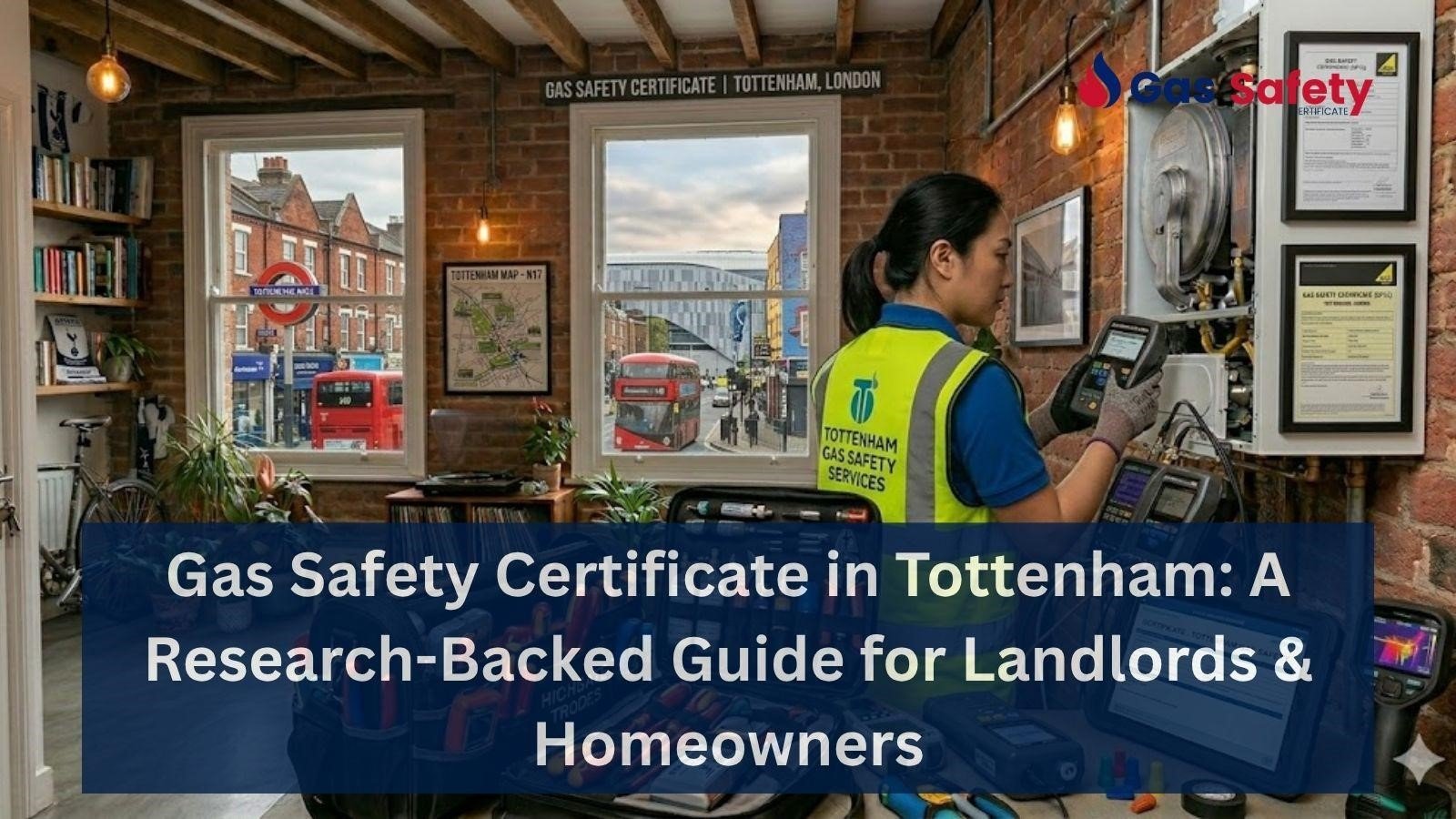
Gas safety is not just a legal obligation it is a life-saving responsibility. In a busy London district like Tottenham, where rental properties, HMOs, and family homes coexist, ensuring gas appliances are safe is critical.
What is a Gas Safety Certificate (CP12)?
A Gas Safety Certificate, also known as a CP12, is an official document issued after a qualified engineer inspects gas appliances and installations in a property.
It confirms:
- Gas appliances are working safely
- Ventilation is adequate
- Flues and chimneys are clear
- No gas leaks or carbon monoxide risks exist
Only engineers registered with the Gas Safe Register are legally allowed to carry out these inspections.
Tottenham Housing Landscape & Gas Safety Risk Profile
Gas Safety Certificate in Tottenham is part of the London Borough of Haringey, an area known for:
- High-density residential living
- A large private rented sector
- Older terraced housing (Victorian/Edwardian)
- Increasing HMO conversions
Risk Implications:
- Aging infrastructure increases failure rates
- Multiple tenants → higher usage of appliances
- More frequent tenant turnover → inconsistent maintenance
These factors make gas safety compliance both more complex and more essential.
The Science Behind Gas Safety (Advanced Insight)
Combustion & Gas Appliances
Gas appliances operate through combustion, producing:
- Heat
- Carbon dioxide (CO₂)
- Water vapour
However, incomplete combustion (due to faults) produces:
- Carbon monoxide (CO)
Why Carbon Monoxide Is So Dangerous
- CO binds to haemoglobin ~240x more effectively than oxygen
- Reduces oxygen delivery to:
- Brain
- Heart
- Vital organs
Neurological Impact:
- Memory loss
- Cognitive impairment
- Long-term brain injury
Exposure Timeline:
| CO Level | Effect |
| Low | Mild headache |
| Medium | Dizziness, nausea |
| High | Collapse, unconsciousness |
| Extreme | Death within minutes |
UK Gas Safety Data: Deep Analysis
National Statistics:
- ~30–50 deaths/year from CO poisoning
- 200–300 hospitalisations annually
- Thousands of near-miss incidents
Improvement Trends:
- CO fatalities reduced by ~40–50% over 10 years
- Driven by:
- Legal enforcement
- Awareness campaigns
- Better appliance design
Ongoing Concerns:
- The private rental sector remains highest risk
- Non-compliant landlords still a major issue
- Older boilers account for majority of faults
Legal Compliance: Detailed Breakdown
Core Law:
Gas Safety (Installation and Use) Regulations 1998
Landlord Legal Duties (Expanded)
1. Annual Gas Safety Checks
- Mandatory every 12 months
- Covers all gas appliances and flues
2. Approved Engineers Only
- Must be on the Gas Safe Register
- Illegal to use unqualified technicians
3. Documentation Rules
- Provide CP12 within:
- 28 days of inspection
- Before tenant move-in
4. Maintenance Obligations
- Maintain appliances in safe condition year-round
- Not just during inspections
Core Law:
Gas Safety (Installation and Use) Regulations 1998
Landlord Legal Duties (Expanded)
1. Annual Gas Safety Checks
- Mandatory every 12 months
- Covers all gas appliances and flues
2. Approved Engineers Only
- Must be on the Gas Safe Register
- Illegal to use unqualified technicians
3. Documentation Rules
- Provide CP12 within:
- 28 days of inspection
- Before tenant move-in
4. Maintenance Obligations
- Maintain appliances in safe condition year-round
- Not just during inspections
Future Trends in Gas Safety
Emerging Technologies:
- Smart CO detectors
- IoT-enabled boilers
- Remote diagnostics
Regulatory Trends:
- Stricter landlord enforcement
- Increased penalties
- More tenant rights
Psychological Factor: Why People Ignore Gas Safety
Research shows:
- People underestimate invisible risks
- Lack of awareness about CO
- Cost-saving mindset
Education and enforcement are key to improving compliance.
Why Gas Safety Matters: UK Statistics & Research
Gas safety is backed by compelling data from credible UK sources:
Key Statistics:
- Around 43 deaths annually are linked to accidental carbon monoxide poisoning in the UK
- An additional 20 deaths per year occur due to other gas-related exposures
- Carbon monoxide incidents have decreased by 46% over the last decade, showing the impact of safety measures
- Independent data suggests ~30 deaths annually from unintentional CO poisoning
Concerning Insight:
- 1 in 5 UK homeowners has never had a gas safety check
This highlights a serious compliance gap—especially relevant in densely populated areas like Tottenham.
Understanding Tottenham’s Housing & Gas Safety Context
Tottenham, located in North London, has:
- A high proportion of rental properties
- A growing number of Houses in Multiple Occupation (HMOs)
- A mix of Victorian, Edwardian, and modern housing
Why this matters:
Older housing stock and frequent tenant turnover increase:
- Appliance wear and tear
- Improper installations
- Lack of maintenance continuity
This makes annual gas safety checks even more critical compared to newer suburban areas.
Scientific Perspective: The Danger of Carbon Monoxide (CO)
Carbon monoxide (CO) is often called the “silent killer.”
Key Properties:
- Colourless
- Odourless
- Tasteless
- Non-irritating
How it affects the body:
CO binds with hemoglobin 240 times more effectively than oxygen, preventing oxygen delivery to vital organs. Symptoms of CO Poisoning:
- Headaches
- Dizziness
- Nausea
- Confusion
- Loss of consciousness
Long exposure can lead to brain damage or death within minutes in severe cases.
Deeper UK Gas Safety Statistics & Trends
Research from UK safety bodies and industry reports reveals:
Annual Impact:
- ~30–50 deaths due to carbon monoxide poisoning
- 200+ hospital admissions linked to CO exposure
- Thousands of unreported minor exposure cases
Positive Trend:
- CO-related deaths have fallen significantly over the last decade
- Attributed to:
- Increased awareness campaigns
- Mandatory landlord checks
- Improved appliance technology
Ongoing Risk:
- The private rented sector remains highest risk category
- Older properties show higher failure rates during inspections
Legal Framework Explained (In Depth)
Gas Safety (Installation and Use) Regulations 1998
This is the primary legislation governing gas safety in England.
Landlord Responsibilities:
1. Annual Safety Checks
- Every gas appliance must be inspected once every 12 months
2. Gas Safe Registered Engineers Only
- Illegal to use unqualified personnel
3. Record Keeping
- Maintain CP12 records for a minimum of 2 years
4. Tenant Communication
- Provide certificate:
- Within 28 days of inspection
- Before new tenants move in
Legal Consequences of Non-Compliance
Failure to comply can result in:
Financial Penalties:
- Unlimited fines in severe cases
Legal Action:
- Prosecution under criminal law
Tenancy Issues:
- Section 21 notices may become invalid
Insurance Risks:
- Claims may be rejected if no valid certificate exists
Expert Opinions from the Industry
Gas Engineers Say:
- “Most dangerous faults are invisible to homeowners.”
- “Even a small crack in a heat exchanger can leak CO.”
Property Experts Say:
- “Landlords who skip inspections often face higher long-term costs.”
- “Preventative maintenance is cheaper than emergency repairs.”
Technical Breakdown of a Gas Safety Inspection
A CP12 inspection is not just a visual check—it involves technical diagnostics.
Detailed Inspection Includes:
1. Gas Tightness Test
- Ensures no leakage in pipework
2. Burner Pressure & Gas Rate Check
- Confirms appliance efficiency
3. Flue Flow Analysis
- Verifies safe removal of combustion gases
4. Ventilation Assessment
- Prevents oxygen depletion
5. Safety Device Testing
- Ensures emergency shut-off systems work
Legal Requirements for Gas Safety Certificates in Tottenham
Gas safety laws apply across England, including Tottenham, under the Gas Safety (Installation and Use) Regulations 1998.
For Landlords:
You must:
- Conduct annual gas safety inspections
- Provide tenants with a CP12 certificate within 28 days
- Maintain records for at least 2 years
Failure to comply can lead to:
- Heavy fines
- Invalid eviction notices
- Insurance issues
- Criminal prosecution or imprisonment
Expert Insight: Why Annual Checks Are Non-Negotiable
Industry experts emphasize that gas appliances can deteriorate silently.
According to gas safety professionals:
- Faulty appliances can leak carbon monoxide (CO)—a colorless, odorless gas
- Even modern boilers can develop faults without warning
- Regular inspections significantly reduce fatal risks
The declining trend in CO deaths is directly linked to increased compliance and awareness.
Gas Safety Challenges in Tottenham
Tottenham presents unique safety challenges due to:
Older Housing Stock
Many properties have aging boilers and pipework, increasing risk.
High Rental Density
Landlords managing multiple tenants must ensure strict compliance.
Property Conversions (HMOs)
Shared properties often have complex gas systems requiring thorough checks.
What Does a Gas Safety Inspection Include?
A certified engineer will inspect the following:
Appliances:
- Boilers
- Gas cookers
- Fires
System Components:
- Pipework
- Flues
- Ventilation systems
Safety Checks:
- Gas pressure
- Combustion performance
- Leak detection
What’s Included in a CP12 Certificate?
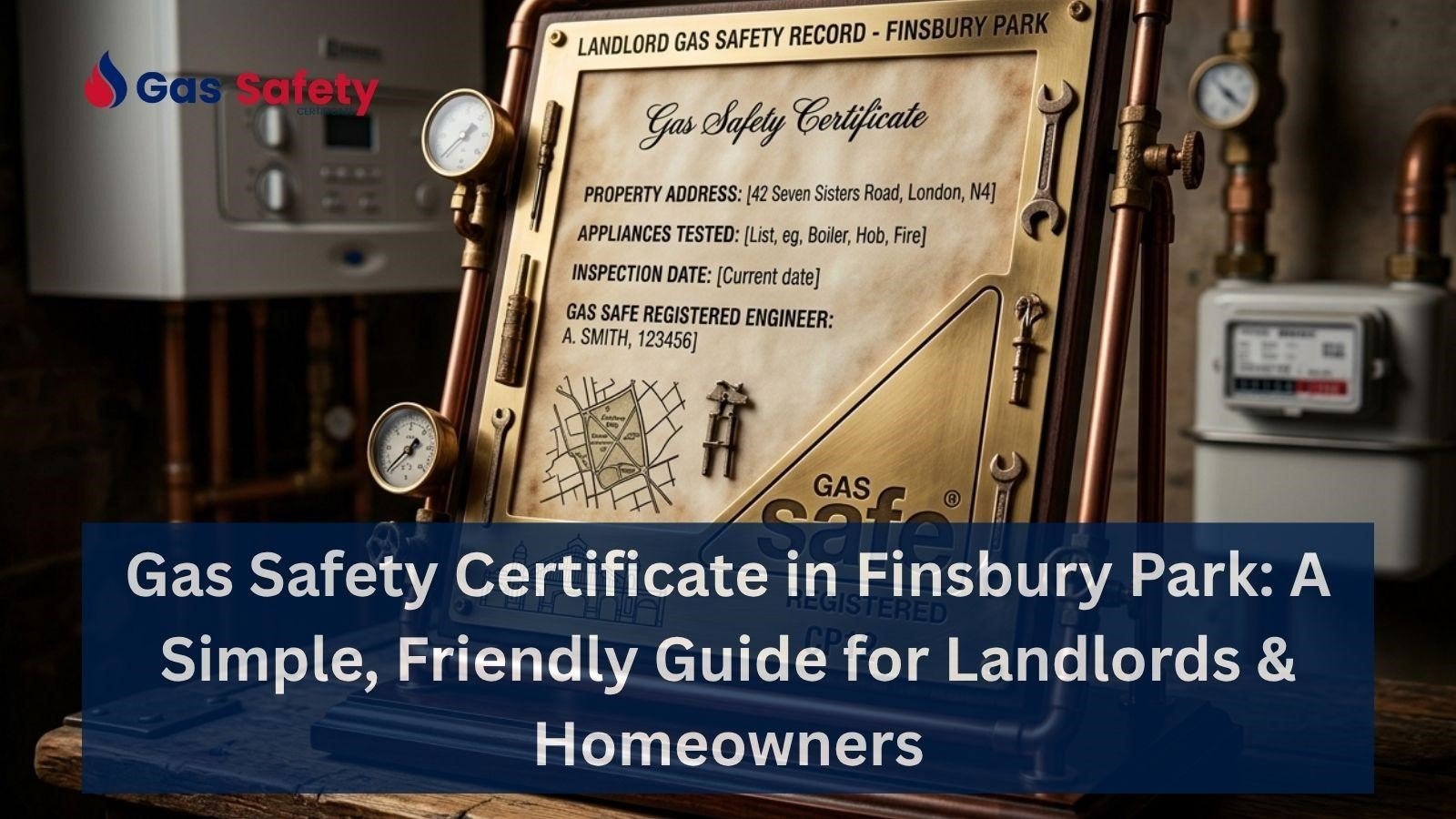
Your certificate will contain:
- Engineer’s details & Gas Safe ID
- Inspection date
- Appliance condition
- Identified faults (if any)
- Safety compliance status
How Often Do You Need a Gas Safety Certificate?
- Landlords: Every 12 months (legal requirement)
- Homeowners: Recommended annually (best practice)
Benefits of Getting a Gas Safety Certificate
Safety First
Protects tenants and families from gas leaks and CO poisoning
Legal Compliance
Avoid penalties and ensure smooth tenancy management
Financial Protection
Reduces risk of costly repairs and legal claims
Property Value
Well-maintained systems improve property appeal
Risks of Ignoring Gas Safety
Neglecting gas safety can result in:
- Carbon monoxide poisoning
- Explosions or fires
- Legal action and fines
- Tenant disputes and liability
Real-Life Insights (Community Experience)
From UK housing discussions on Reddit:
“A gas safety certificate had been done… but a leak was still found later.”
This shows that:
- Certificates must be issued properly and regularly
- Ongoing vigilance is essential—even after inspection
Choosing a Reliable Gas Safety Service in Tottenham
When selecting a provider:
Check:
- Gas Safe registration
- Experience with rental properties
- Transparent pricing
- Fast turnaround times
Look for:
- Same-day or next-day service
- Digital certificates
- Emergency support
Why choose gassafetycertificateuk.co.uk?
Gassafetycertificateuk offers professional and reliable services tailored for London properties.
Key Benefits:
- Certified Gas Safe engineers
- Competitive pricing
- Fast bookings across Tottenham
- Fully compliant CP12 certificates
- Landlord-focused services
Ideal for landlords who want peace of mind and full legal compliance.
Step-by-Step Booking Process
- Contact gassafetycertificateuk.co.uk
- Choose your preferred time
- Engineer visits your property
- Full inspection carried out
- Certificate issued instantly (if compliant)
Future of Gas Safety in Tottenham & London
Emerging Trends:
- Smart gas monitoring systems
- Stricter landlord enforcement
- Increased tenant awareness
Technology Impact:
- Digital certification
- Remote diagnostics
- Predictive maintenance
Real-World Case Study
Scenario:
A landlord in North London skipped annual checks for 2 years.
Outcome:
- The tenant reported headaches
- CO leak discovered
- Legal action taken
Lesson:
Regular inspections could have:
- Prevented health risks
- Avoided legal consequences
Gas Safety Certificate Process (Step-by-Step)
- Book an appointment
- An engineer visits your property
- Full inspection conducted
- Issues identified (if any)
- CP12 certificate issued
Future of Gas Safety in London
With stricter housing regulations and increased awareness:
- Compliance rates are improving
- Technology (smart meters, sensors) is enhancing safety
- Enforcement is becoming stricter for landlords
CP12 Certificate: Advanced Breakdown
A professional CP12 includes the following:
- Appliance classification:
- Safe
- At Risk (AR)
- Immediately Dangerous (ID)
Important:
- AR and ID appliances must not be used
- Engineers may disconnect dangerous appliances immediately
Tottenham-Specific Risk Factors
High Tenant Turnover
- Increased likelihood of:
- Improper appliance use
- Missed maintenance
DIY Installations
- Some landlords attempt illegal installations
Shared Living Spaces (HMOs)
- Multiple appliances increase risk complexity
Cost of Gas Safety Certificate in Tottenham
Prices vary depending on:
Average Pricing Factors:
- Number of appliances
- Property size
- Accessibility
Investing in a certificate is far cheaper than:
- Legal penalties
- Emergency repairs
- Liability claims
Timeline & Validity Rules (Advanced Insight)
Flexibility Rule:
You can renew your certificate up to 2 months before expiry without losing validity.
This allows landlords to
- Maintain continuous compliance
- Avoid last-minute risks
Common Gas Safety Failures in Tottenham
Based on inspection data, common issues include:
- Blocked flues
- Poor ventilation
- Gas leaks
- Faulty boilers
- Incorrect installations
Preventative Best Practices
For Landlords:
- Schedule inspections early
- Keep digital records
- Install CO alarms (mandatory in many cases)
For Tenants:
- Report unusual smells immediately
- Never block vents
- Avoid DIY gas repairs
Final Thoughts
Gas safety is a non-negotiable responsibility—especially in high-density areas like Tottenham. With dozens of preventable deaths still occurring annually in the UK, regular inspections are essential.
A valid Gas Safety Certificate is more than paperwork—it’s a lifeline for tenants and homeowners.
Partnering with a trusted provider like gassafetycertificateuk.co.uk ensures:
- Full compliance
- Enhanced safety
- Complete peace of mind
FAQs
1. Is a Gas Safety Certificate mandatory in Tottenham?
Yes, for landlords it is legally required annually under UK law.
2. How long is a CP12 certificate valid?
It is valid for 12 months from the date of inspection.
3. Can I get fined for not having one?
Yes. Non-compliance can lead to fines, legal action, and even imprisonment.
4. How much does a Gas Safety Certificate cost in Tottenham?
Costs vary depending on property size and number of appliances, but competitive pricing is available through services like gassafetycertificateuk.co.uk.
5. Do homeowners need a gas safety certificate?
It’s not legally required, but strongly recommended for safety.